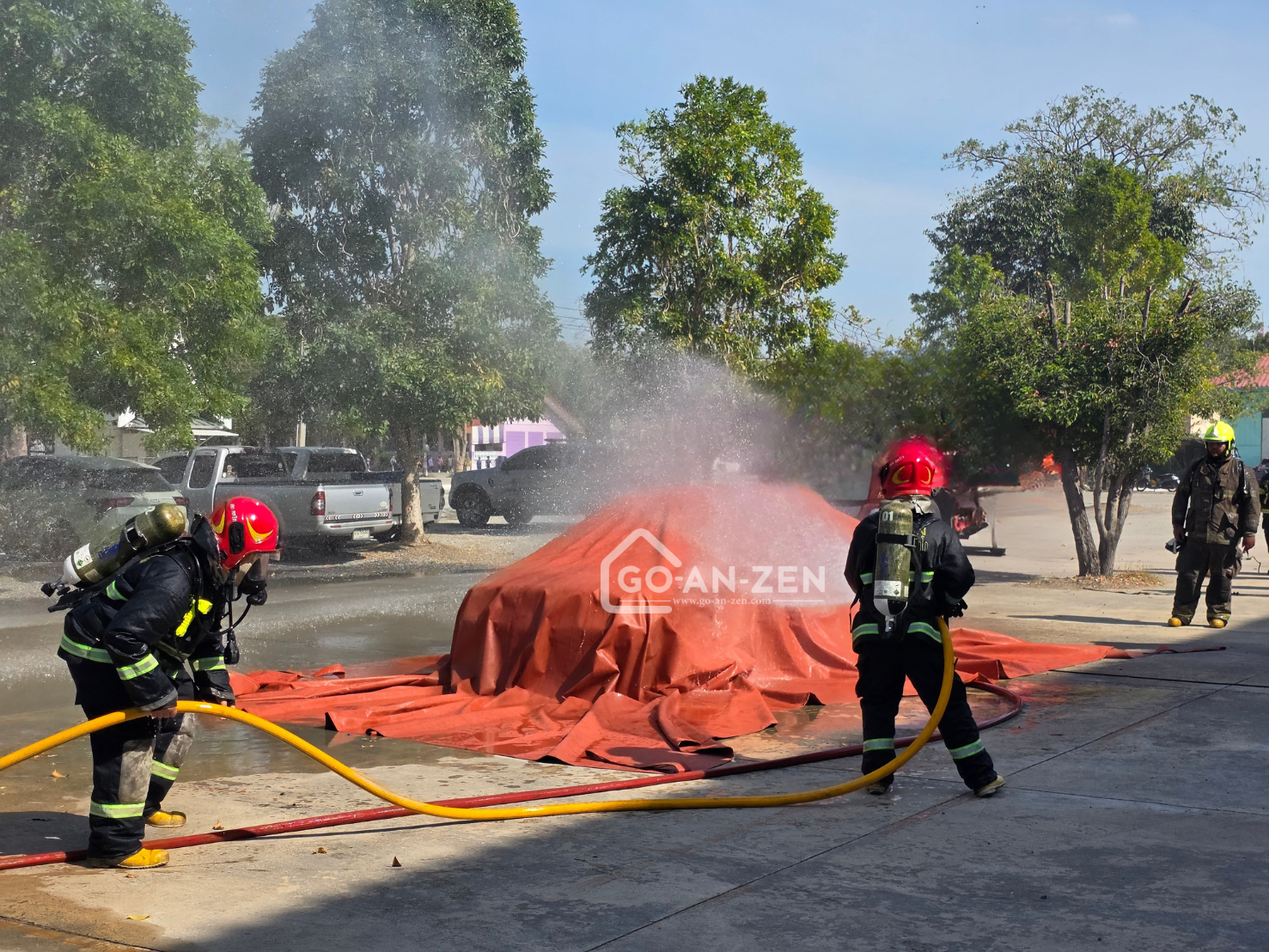
1. Different Sources of Fire
Gasoline vehicle fires stem from flammable liquid burning on contact with air, and can be put out by cutting off oxygen or cooling the fuel. In contrast, lithium-ion batteries store chemical energy inside hundreds or thousands of individual cells. Combustion occurs from internal chemical reactions, and does not rely solely on oxygen from the outside environment.
2. The Thermal Runaway Effect
When one battery cell is damaged — from impact, overheating, or an electrical short circuit — its internal temperature rises rapidly, triggering a chain reaction that spreads to adjacent cells. This process releases intense heat, flames, and toxic gases, and can reoccur even after the fire appears to have stopped.
3. Why Ordinary Water Alone Is Often Not Enough
Extinguishing battery fires requires many times more water than gasoline vehicle fires. The main goal is to lower the temperature of the battery cells below the threshold that sustains the chain reaction, not just to put out visible flames. For this reason, fire departments in many countries need extra water supplies and take far longer to bring these incidents under control.
4. Risk of Re-ignition
Even after visible flames die down, trapped heat inside the battery can cause the fire to restart hours or even days later. This is why international safety authorities recommend keeping a damaged EV under observation or storing it safely for an extended period after an incident.
5. Toxic Gases and Health Risks
During thermal runaway, batteries release dangerous substances such as hydrogen fluoride, which is highly toxic if inhaled. Being near the scene without proper protective equipment poses serious health risks.
Conclusion
Given the unique nature of EV battery fires, having purpose-built equipment — such as fire blankets designed to contain spread and limit oxygen supply — is just as important as carrying standard fire extinguishers. This is especially critical in hard-to-reach areas such as underground parking garages and charging stations.